
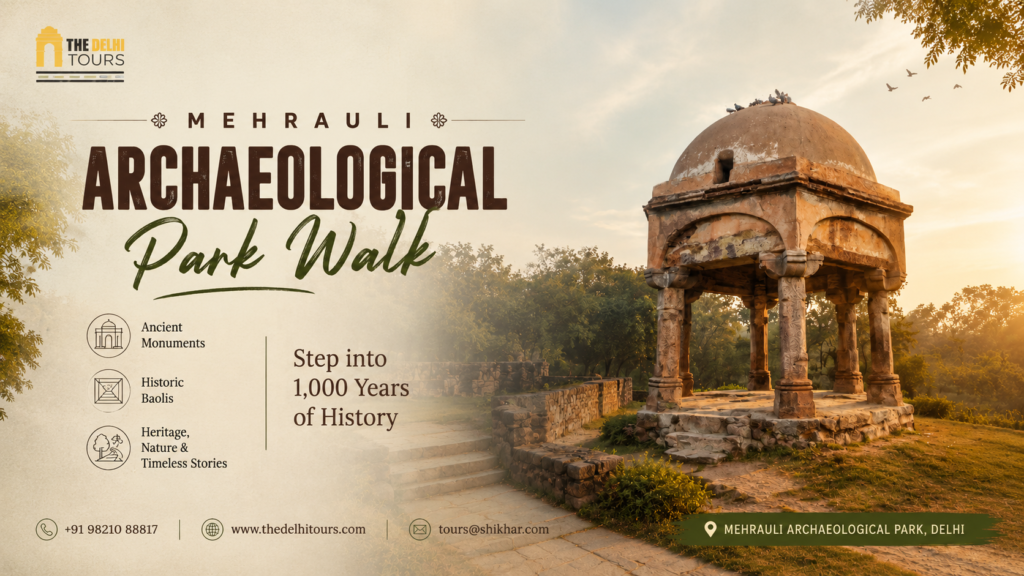
Delhi is often celebrated for its grand monuments and vibrant culture, but hidden amidst the bustle of South Delhi lies a heritage landscape that narrates more than a millennium of history. The Mehrauli Archaeological Park Walk offers an extraordinary opportunity to explore ancient tombs, forgotten baolis, ruined mosques, and lush green surroundings that together tell the story of Delhi’s earliest dynasties.
Spread over nearly 200 acres, Mehrauli Archaeological Park is one of India’s most fascinating heritage sites, containing more than 100 historically significant monuments dating from the 10th century to the Mughal era. Unlike conventional monuments enclosed within walls, this remarkable heritage zone allows visitors to experience history in its natural setting, making every walk feel like a journey through time.
Why Visit Mehrauli Archaeological Park?
While most visitors to Delhi head towards famous attractions such as Qutub Minar or Humayun’s Tomb, Mehrauli Archaeological Park remains one of the city’s most underrated treasures. A walk through this historic landscape reveals layers of Delhi’s evolution, showcasing architecture and stories from the Rajput, Delhi Sultanate, Lodi, and Mughal periods.
What makes this destination truly unique is the seamless blend of history and nature. Ancient ruins coexist with thick vegetation, migratory birds, and peaceful walking trails, offering visitors an immersive experience unlike any other heritage site in the capital.
For history enthusiasts, photographers, architecture lovers, and curious travelers, the park provides a rare opportunity to witness monuments that have stood silently for centuries while retaining their original charm.
The Historical Significance of Mehrauli Archaeological Park
The region surrounding Mehrauli is among the oldest continuously inhabited areas in Delhi. Long before New Delhi emerged as India’s political center, Mehrauli served as the capital of several dynasties that shaped the city’s identity.
The archaeological park preserves monuments spanning nearly 1,000 years, representing successive periods of architectural and cultural development. These structures provide valuable insights into medieval engineering, Islamic architecture, water conservation systems, and royal patronage.
As visitors walk through the park, they essentially traverse different chapters of Delhi’s history, making it one of the most important heritage landscapes in India.
Rajon Ki Baoli: A Masterpiece of Medieval Water Architecture
Among the park’s most celebrated attractions is Rajon Ki Baoli, a magnificent three-storeyed stepwell built during the reign of Sikandar Lodi in 1506. Constructed by Daulat Khan, this baoli reflects the advanced water management techniques practiced in medieval India.
The name “Rajon Ki Baoli” translates to “Stepwell of the Masons,” suggesting that skilled craftsmen once used this structure as a resting place. The intricate arches, symmetrical galleries, and descending steps create an atmosphere of timeless beauty.
Today, Rajon Ki Baoli stands as one of Delhi’s finest examples of stepwell architecture and remains a favorite spot for photographers and heritage walkers.
Jamali Kamali Mosque and Tomb: A Blend of Spirituality and Art
Another iconic landmark within Mehrauli Archaeological Park is the Jamali Kamali complex. Built during the early Mughal period, the monument consists of a mosque and the tomb of the renowned Sufi saint and poet Sheikh Jamali.
The interiors are adorned with intricate carvings, floral patterns, and Persian inscriptions that showcase the artistic excellence of Mughal craftsmanship. The monument’s elegant proportions and peaceful ambiance make it one of the most visually captivating structures within the park.
Apart from its architectural significance, the complex is also associated with numerous legends and stories, adding an element of mystery to its historical appeal.
Quli Khan’s Tomb: From Mughal Monument to British Residence
One of the most intriguing sites in the park is Quli Khan’s Tomb, originally built during the Mughal era. During British rule, the monument underwent a remarkable transformation and was converted into the residence of Sir Thomas Metcalfe, a prominent British official.
This adaptation created a fascinating blend of Mughal architecture and colonial influences. Surrounded by greenery and offering panoramic views, the monument exemplifies how historical structures evolve over time while retaining their original essence.
Visitors exploring the park often find Quli Khan’s Tomb among its most peaceful and picturesque corners.
Ancient Baolis and Water Heritage
The medieval rulers of Delhi understood the importance of sustainable water management. As a result, several stepwells and reservoirs were constructed across the region.
These structures served not only as water storage systems but also as social spaces where communities gathered. Their architectural brilliance demonstrates the ingenuity of traditional Indian engineering.
Exploring these ancient water structures provides valuable insights into how earlier civilizations adapted to environmental challenges long before modern technology emerged.
Nature and Heritage in Perfect Harmony
Unlike many archaeological sites dominated solely by stone structures, Mehrauli Archaeological Park offers a refreshing combination of monuments and natural beauty.
Towering trees, flowering plants, and open landscapes create a serene environment that attracts both residents and migratory birds. During winter months, the park becomes particularly vibrant, making it an excellent destination for nature lovers and birdwatchers.
Morning walks through the park reveal mist-covered ruins, chirping birds, and golden sunlight filtering through ancient arches—creating scenes that feel almost cinematic.
A Paradise for Photographers
Mehrauli Archaeological Park has become increasingly popular among photographers and content creators seeking unique historical backdrops. Every monument within the park offers distinct textures, arches, domes, and perspectives that create compelling visual compositions.
Sunrise and sunset are especially magical, as the warm light accentuates the sandstone structures and highlights intricate architectural details.
Whether capturing portraits, landscapes, or heritage photography, the park provides endless opportunities for creative expression.
What to Expect During a Heritage Walk
A guided Mehrauli Archaeological Park Walk is far more than a sightseeing experience. It is an engaging journey through centuries of history, legends, architecture, and culture.
Participants often encounter:
- Ancient monuments dating back nearly 1,000 years.
- Magnificent baolis and water systems.
- Tombs of nobles and Sufi saints.
- Mughal and Sultanate architecture.
- Scenic walking trails surrounded by greenery.
- Stories and legends rarely found in guidebooks.
Heritage walks help visitors understand the historical context behind each monument, transforming ruins into vivid narratives of Delhi’s past.
Best Time to Visit Mehrauli Archaeological Park
The ideal season to explore Mehrauli Archaeological Park is between October and March when Delhi experiences pleasant weather.
Early mornings are particularly recommended because the soft sunlight enhances the beauty of the monuments while offering comfortable temperatures for walking. Evening visits are equally rewarding, especially for photography enthusiasts seeking dramatic golden-hour lighting.
Monsoon months also bring lush greenery, although the trails may become slippery after rainfall.
Tips for Visitors
To make the most of your Mehrauli Archaeological Park Walk, consider planning your visit thoughtfully. Comfortable footwear is essential, as the park covers a considerable area and involves extended walking.
Carrying water, sunscreen, and a camera can enhance the experience. Since many monuments contain fascinating historical details, joining a guided heritage walk is highly recommended for gaining deeper insights into Delhi’s rich legacy.
Visitors should also respect the site’s historical importance by avoiding littering and preserving the monuments for future generations.
Why Mehrauli Archaeological Park Is a Hidden Gem of Delhi
Despite housing over a hundred monuments and centuries of history, Mehrauli Archaeological Park remains surprisingly less crowded compared to many other attractions in Delhi. This relative tranquility allows visitors to appreciate the architectural marvels and natural beauty at their own pace.
Few places in India offer such a comprehensive glimpse into the rise and transformation of multiple dynasties within a single landscape. From Rajput beginnings to Mughal elegance and colonial adaptations, the park encapsulates Delhi’s layered identity like no other destination.
Conclusion
The Mehrauli Archaeological Park Walk is much more than a heritage excursion—it is an invitation to step into a thousand years of living history. From the grandeur of Rajon Ki Baoli and the artistic beauty of Jamali Kamali to the fascinating story of Quli Khan’s Tomb, every monument reveals a different chapter of Delhi’s remarkable past.
For travelers seeking authentic experiences beyond conventional tourist attractions, Mehrauli Archaeological Park promises an unforgettable blend of history, architecture, nature, and timeless stories.
Whether you are a history enthusiast, photographer, student, or simply a curious explorer, a walk through Mehrauli Archaeological Park offers a rare chance to witness the soul of Delhi preserved across centuries.